Last updated 2026-07-26
TL;DR
Epitalon (also spelled epithalon) peptide injections are typically dosed at 5-10mg/day subcutaneously for 10-20 days, based almost entirely on Russian research led by Vladimir Khavinson. Rodent studies show telomerase activation and lifespan extension; there are no controlled human trials confirming these effects. Treat it as unproven, not disproven.
What is epitalon and why is it injected?
Epitalon is a synthetic version of a peptide called epithalamin, originally isolated from the pineal gland by researchers at the St. Petersburg Institute of Bioregulation and Gerontology. The synthetic tetrapeptide has the sequence Ala-Glu-Asp-Gly, and it's sometimes written as epithalon, which is the same compound under a different transliteration from Russian [1]. It's injected rather than swallowed because it's a small peptide chain that would likely get broken down by digestive enzymes before reaching the bloodstream in any meaningful amount. That's true of most peptides in this class (BPC-157, TB-500, thymosin alpha-1, and so on). Subcutaneous injection bypasses the gut entirely and gets the peptide into circulation directly. The pitch behind epitalon is that it may support pineal gland function, regulate melatonin secretion, and, most famously, activate telomerase, the enzyme that rebuilds the protective caps on the ends of chromosomes. Shorter telomeres are associated with cellular aging, so a compound that lengthens them or slows their shortening is an obvious target for anyone interested in longevity. The catch is that almost everything supporting that telomerase claim comes from one research group, working mostly in rodents and human cell cultures, not from independently replicated human trials. If you're deciding whether to try it, understand upfront that this is an experimental peptide with a thin, geographically narrow evidence base, not an approved therapy with a settled safety and efficacy profile.
What does the research on epitalon actually show?
The foundational work on epitalon comes almost entirely from Vladimir Khavinson and colleagues at the St. Petersburg Institute of Bioregulation and Gerontology, publishing mainly in Russian-language journals and a handful of English-language papers over the past two decades [2]. One frequently cited paper, published in Neuro Endocrinology Letters, reported that epithalon activated telomerase and lengthened telomeres in human somatic cells cultured in the lab [3]. Another line of work in mice and rats reported increased lifespan and reduced tumor incidence in certain cancer-prone strains treated with epithalamin or epitalon [4]. These are real, published findings. They are also rodent and cell-culture data, not human clinical outcomes. Here's the honest gap: there is no large, independently replicated, placebo-controlled human trial showing that epitalon injections extend human lifespan, reverse human telomere shortening, or reduce human mortality from any cause. The human-relevant literature that exists is small, comes overwhelmingly from the same research network, and has not been repeated by independent labs in the US, EU, or elsewhere with the same positive results. A 2021 review of peptide bioregulators noted the promising preclinical signal but explicitly flagged the need for rigorous, independently conducted human trials before any clinical claims are warranted [5]. That doesn't mean epitalon does nothing. It means the leap from 'lengthens telomeres in a petri dish' or 'extends lifespan in cancer-prone mice' to 'will slow human aging' is a leap the current evidence doesn't support, no matter how often it gets repeated in marketing copy. For a fuller breakdown of what the before-and-after claims are actually based on, see epitalon peptide before and after.
How do you use epitalon peptide injections?
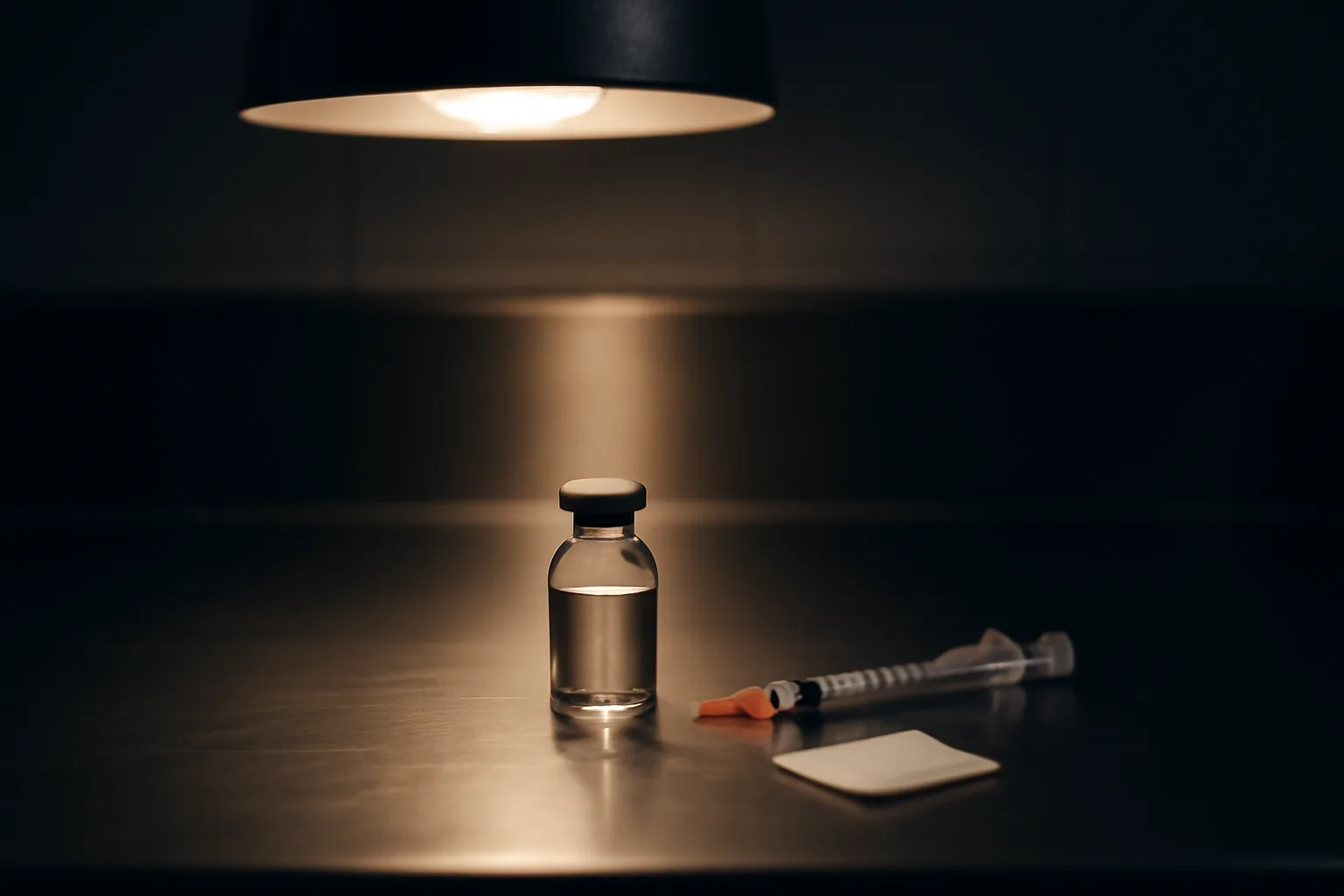
Most protocols follow the pattern used in the original Russian studies and repeated across peptide forums and gray-market suppliers: a short course of daily subcutaneous injections, followed by a break of several months. A typical cycle looks like 5-10mg per day, injected subcutaneously (into the fat layer under the skin, usually the abdomen), for 10 to 20 consecutive days. Some protocols run twice a year, spring and autumn, echoing the seasonal dosing used in some of the aging-related animal studies. There is no dose-ranging human trial establishing an optimal dose, so any number you see, including the ones above, is an extrapolation from animal work and anecdotal self-experimentation, not a clinically established figure. Injection technique is straightforward if you've used any subcutaneous peptide before: pinch a fold of skin, insert a short (typically 29-31 gauge) insulin-style needle at roughly a 45-90 degree angle, and inject slowly. Reconstituted peptide should be kept refrigerated and used within the timeframe recommended by the supplier, generally days to a few weeks depending on how it was mixed. For the mechanics of drawing up, mixing, and injecting, Epitalon how to inject covers the step-by-step. For how the cycle-on, cycle-off pattern is usually structured, see Epitalon cycle length.
How much epitalon should you inject, and how is it calculated?
There's no FDA-approved dose because epitalon isn't an FDA-approved drug. What circulates instead is a consensus range drawn from the original Russian dosing schedules and adopted by peptide suppliers and self-experimenters. The most commonly cited range is 5-10mg per day. Some lower-dose protocols use 1-3mg per day over longer stretches. Because there's no standardized human pharmacokinetic study establishing a minimum effective dose or a ceiling, dosing decisions right now are really judgment calls layered on top of thin animal data, not evidence-based titration. Body weight isn't typically used to scale the dose the way it is with some other peptides, since the original studies used flat doses in humans and animals rather than mg/kg calculations. If you want a structured way to think through cycle length and quantity needed per vial, the epitalon dosage calculator walks through the math, though it's worth repeating that any calculator here is organizing anecdotal convention, not delivering a clinically validated number. One practical note: injectable epitalon is generally supplied as a lyophilized (freeze-dried) powder in a vial, which needs to be reconstituted with bacteriostatic water or sterile water before injection. Concentration after reconstitution determines how much volume corresponds to a given mg dose, so get the math right before drawing up a syringe.
How long is a typical epitalon cycle?
Cycles in the literature and in common practice run 10 to 20 days of daily injections, with some protocols repeating this twice yearly. That's a short, defined course rather than continuous daily use indefinitely. The logic, to the extent there is one, comes from the seasonal dosing pattern used in some of the original Russian aging studies, where researchers speculated that pulsed rather than continuous peptide exposure might better mimic natural pineal gland activity patterns tied to circadian and seasonal rhythms. This is a plausible-sounding rationale, but it hasn't been tested against continuous dosing in controlled human trials, so treat it as a working assumption rather than settled pharmacology. After a cycle, most protocols call for a gap of months, often framed as twice-a-year use, before repeating. There is no clinical data indicating what happens with more frequent or continuous dosing in humans, for better or worse. More detail on how people structure these on/off periods, and why, is at Epitalon cycle length.
How long does epitalon stay active in the body?
Epitalon is a very short peptide (four amino acids), and short peptides generally get cleared from circulation quickly, on the order of minutes to a couple of hours, though there's no rigorously published human half-life study specific to epitalon that would let anyone quote an exact figure with confidence. This short circulating half-life is part of the argument some proponents make for why it's dosed daily over a short course rather than as an occasional dose: if it's cleared fast, you need repeat dosing to maintain any exposure window. Whatever downstream biological effects the peptide might trigger (on telomerase gene expression, for instance) could in theory outlast the peptide's presence in blood, but that's a mechanistic hypothesis, not a measured pharmacokinetic outcome in humans. For a closer look at what is and isn't known about clearance and duration of action, see Epitalon half life.
Is epitalon legal, and is it FDA approved?
Epitalon is not FDA-approved for any human medical use. It has no approved indication, and it is not included on the FDA's list of bulk drug substances eligible for compounding under section 503A or 503B of the Federal Food, Drug, and Cosmetic Act [6]. In practice, it's sold in the US as a 'research chemical' or 'research use only' product, which is a legal gray zone: sellers avoid making medical claims to sidestep drug regulation, while buyers use the product on themselves anyway. Injecting a research-only compound intended for lab use is not the same as using an FDA-approved, prescribed medication, and quality control (sterility, actual peptide content, contaminants) is not guaranteed by any regulatory body in that channel. Some US clinics offer epitalon through compounding pharmacies with a prescription, which at least adds a layer of sterility and dosing oversight compared to buying vials online directly, though this doesn't change the underlying evidence gap about whether the compound does what the marketing claims. If you go this route, working with a provider who reviews your history before prescribing, and who sources from a compounding pharmacy rather than an unregulated research-chemical vendor, is the meaningfully safer path.
What are the side effects and safety risks of epitalon injections?
There is no large-scale human safety database for epitalon the way there is for approved drugs. The animal and small human studies from the Khavinson group report it as well tolerated, without describing serious adverse events, but 'well tolerated in a small Russian study cohort' is a much weaker safety signal than what's expected before a compound is considered safe for general use [2][4]. Reported issues in anecdotal use are mostly what you'd expect from any subcutaneous peptide injection: injection site redness, mild swelling, or irritation at the injection site. Because it's marketed as affecting melatonin regulation and pineal function, people with sleep disorders or those on other medications affecting circadian rhythm should be cautious, and there's no data on interactions with common medications. Bigger unknowns: there is no human data on long-term use beyond a few cycles, no data in people with cancer history (despite, or perhaps because of, animal cancer-incidence studies), no pregnancy or lactation safety data, and no data on interaction with hormone therapies. If you're on any prescription medication, have a personal or family cancer history, or are pregnant or trying to conceive, the responsible move is to not use this without discussing it with a physician who knows your full history, and probably not even then given how little is known.
How should you take epitalon (injection technique and storage)?
Reconstitution comes first: the lyophilized powder is mixed with bacteriostatic water or sterile water, typically using a syringe to inject water gently down the vial wall rather than directly onto the powder, to avoid degrading the peptide with excess agitation. Once reconstituted, epitalon should be refrigerated (not frozen) and used within the window specified by whoever supplied it, commonly cited as up to several weeks refrigerated, though there's no rigorously published stability study establishing an exact shelf life once mixed. Discard if the solution looks cloudy or discolored. For injection: clean the site with an alcohol swab, pinch a fold of subcutaneous fat (abdomen is common), insert a fine insulin-style needle, inject slowly, and rotate injection sites day to day to avoid irritation buildup at any one spot. Draw up only what you need for that day's dose based on the reconstituted concentration. A broader walk-through of dosing schedules, timing relative to meals or time of day, and how people sequence epitalon with other peptides is covered in how to take epitalon peptide.
Epitalon vs other longevity peptides: how does it compare?
Epitalon gets grouped with other 'longevity' peptides like GHK-Cu, thymosin alpha-1, and various growth hormone secretagogues, but the mechanisms and evidence bases are quite different across that group.
| Peptide | Primary claimed mechanism | Strength of human evidence |
|---|---|---|
| Epitalon (epithalon) | Telomerase activation, pineal/melatonin regulation | Very limited; mostly one Russian research group, rodent and cell data [2][3][4] |
| GHK-Cu | Collagen synthesis, wound healing, gene expression modulation | Moderate for topical/dermal use; weaker for systemic anti-aging claims |
| Thymosin alpha-1 | Immune modulation | Stronger; has actual FDA-recognized clinical development history in some indications |
| Growth hormone secretagogues (e.g., ipamorelin) | Stimulate endogenous GH release | Moderate; GH axis effects are well characterized, longevity benefit unproven |
The honest takeaway is that epitalon has one of the thinner, more geographically concentrated evidence bases in this category, specifically for the telomerase and lifespan claims that make it famous. That's not a reason to dismiss it outright (early-stage peptides often start this way), but it is a reason to weight the marketing claims you see against the actual size and independence of the studies behind them.
Where can you get epitalon, and does sourcing matter?
Epitalon is available through two broad channels: unregulated online 'research chemical' vendors selling directly to consumers, and US compounding pharmacies that supply it to clinics and prescribers. The unregulated channel has documented quality problems across the peptide industry generally. Independent testing efforts on research-chemical peptide vendors have repeatedly found products with incorrect peptide content, contamination, or mislabeled concentrations, though full product-by-product public testing specific to epitalon vials is limited; the broader pattern across gray-market peptide sourcing is well established enough that caution is warranted regardless of the specific compound . The compounding pharmacy channel, used when a prescriber orders epitalon for a patient, at least routes the product through a facility subject to state pharmacy board oversight and USP sterility and compounding standards, even though the underlying substance still isn't FDA-approved for this use. That's a real difference in manufacturing accountability, even if it doesn't change the underlying evidence question. Epitalon Rx works with a provider-reviewed process that connects patients to a licensed prescriber and a named compounding pharmacy partner, rather than shipping product directly to consumers the way research-chemical sites do. If you're going to use this peptide, that kind of provider-reviewed, pharmacy-fulfilled path is the more accountable option compared to an anonymous vial from an unregulated site.
Is epitalon worth trying given the evidence?
That depends on what you're expecting. If you're expecting a clinically proven human lifespan extender, the honest answer is no, that evidence doesn't exist yet. What exists is a genuinely interesting, but narrow and unreplicated, body of Russian research showing telomerase activation in human cell cultures and lifespan extension in some rodent strains [3][4]. If you're an experimentally minded person who understands you're essentially participating in an uncontrolled, unblinded self-experiment with a compound that has a reasonable safety signal in small studies but no long-term human safety data, that's a different calculation, and it's yours to make with a doctor who knows your history. What I'd actually tell a researcher evaluating this space: don't take the telomerase and lifespan claims at face value just because they're repeated confidently across peptide seller sites. Go find the primary Khavinson papers, read the study designs, note the sample sizes and species, and weigh that against how the marketing describes it. The gap between what's published and what's claimed is the single most important thing to understand about epitalon before spending money or putting a needle in your abdomen.
Frequently asked questions
What is the difference between epitalon and epithalon?
None, they're the same peptide. Epithalon is the more direct transliteration from the original Russian research (epithalamin/epithalon), while epitalon became the more common spelling in Western peptide markets. Any product or study using either spelling is referring to the same Ala-Glu-Asp-Gly tetrapeptide sequence.
How is epitalon peptide injected?
Subcutaneously, typically into the abdominal fat, using a short insulin-style needle after reconstituting the freeze-dried powder with bacteriostatic or sterile water. Common protocols use daily injections of 5-10mg for 10 to 20 days, though no clinical trial has established this as an optimal or minimum effective dose in humans.
What is a typical epitalon dosage?
Most protocols cite 5-10mg per day for 10 to 20 consecutive days, based on the original Russian research and adopted by peptide suppliers. This range isn't derived from a human dose-ranging trial; it's an extrapolation from animal studies and self-reported use, so treat it as convention rather than established medical dosing.
Does epitalon actually lengthen telomeres in humans?
There's evidence it activates telomerase and lengthens telomeres in cultured human somatic cells in a lab dish, published by Khavinson's group in Neuro Endocrinology Letters. There is no independently replicated study showing epitalon lengthens telomeres in living humans through injection, so this remains an unproven extrapolation, not a confirmed human outcome.
Is epitalon FDA approved or legal in the US?
Epitalon is not FDA-approved for any human use and isn't on the FDA's approved bulk substances list for compounding. It's sold as a research chemical in an unregulated gray market, or, more accountably, through licensed compounding pharmacies when prescribed by a provider for off-label, patient-specific use.
How long does an epitalon cycle last?
Typical cycles run 10 to 20 days of daily injections, often repeated twice a year with months-long breaks in between. This pattern comes from seasonal dosing used in some original Russian animal studies, not from human trials comparing pulsed versus continuous dosing.
What are the side effects of epitalon injections?
Reported issues are mainly injection site redness, swelling, or mild irritation, consistent with any subcutaneous peptide injection. Small studies from the original Russian research group describe it as well tolerated, but there's no large human safety database, and long-term effects beyond a few cycles are unknown.
Can epitalon reverse aging?
No human trial supports the claim that epitalon reverses aging. The lifespan-extension and reduced-tumor-incidence findings come from rodent studies, and the telomerase-activation findings come from cultured human cells, not from clinical trials measuring aging outcomes in living people.
How long does epitalon stay in your system?
There's no published human half-life study specific to epitalon, but as a very short peptide, it's expected to clear from circulation within minutes to a couple of hours after injection. Any downstream biological effects on gene expression could theoretically last longer, but that hasn't been directly measured in humans.
Who conducted the main research on epitalon?
Almost all foundational research comes from Vladimir Khavinson and colleagues at the St. Petersburg Institute of Bioregulation and Gerontology in Russia, published mainly in Russian-language journals with some English translations. Independent replication of the key telomerase and lifespan claims outside this research network is limited.
Should I buy epitalon from an online research chemical vendor?
It's the riskier option. Unregulated peptide vendors have a documented history of mislabeled concentrations and contamination across the industry. A provider-reviewed prescription filled through a licensed compounding pharmacy gives you sterility and dosing accountability that direct-to-consumer research chemical sites don't.
Does epitalon interact with other medications?
There's no published human data on drug interactions with epitalon. Because it's linked to melatonin and pineal gland regulation, caution is reasonable if you're on medications affecting sleep or circadian rhythm, but this hasn't been formally studied, so any interaction risk is currently unknown rather than ruled out.
How much does an epitalon cycle typically cost?
Pricing varies widely by source and vial size, with unregulated research-chemical vendors often cheaper than prescription routes through compounding pharmacies. Because purity and actual peptide content aren't guaranteed in the unregulated channel, a lower price there doesn't necessarily mean better value once quality risk is factored in.
Sources
- PubChem, Epitalon (Epithalon) compound summary: Epitalon's chemical identity as the tetrapeptide Ala-Glu-Asp-Gly and its synonymous spelling as epithalon
- Khavinson VK, et al., 'Peptide regulation of aging', Neuro Endocrinology Letters: Origin of epitalon research from the St. Petersburg Institute of Bioregulation and Gerontology group
- Khavinson VK, et al., telomerase activation study, Neuro Endocrinology Letters: Epithalon activated telomerase and lengthened telomeres in cultured human somatic cells
- Anisimov VN, et al., epithalamin lifespan and tumor studies: Epithalamin/epitalon increased lifespan and reduced tumor incidence in certain rodent strains
- Review of peptide bioregulators and aging, PubMed: Preclinical peptide bioregulator findings require independently conducted human trials before clinical claims are warranted
- FDA, Compounding Laws and Policies (Section 503A/503B bulk substances): Epitalon is not on FDA's approved bulk drug substances list for compounding under 503A/503B