Last updated 2026-07-26
TL;DR
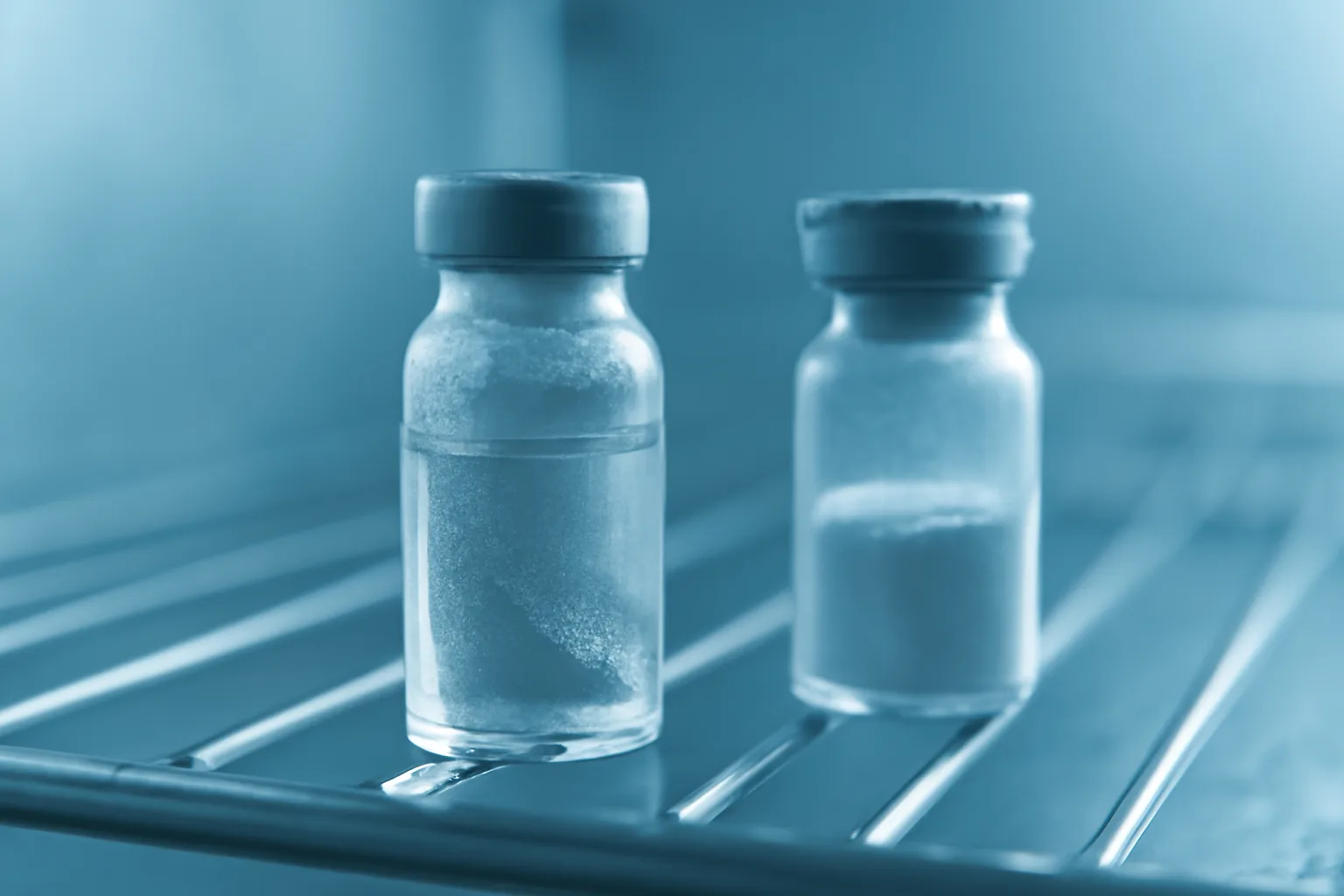
Freeze-dried (lyophilized) epitalon powder stays stable for a long time, likely years, if kept cold, dark, and dry. Once mixed with water (reconstituted), most compounding and peptide-handling guidance points to using it within 2 to 4 weeks if refrigerated at 36-46°F, and discarding it if it turns cloudy, changes color, or was ever left at room temperature for more than a few hours.
How long does epitalon last unmixed (lyophilized powder)?
Lyophilized (freeze-dried) epitalon powder is far more stable than reconstituted liquid. Peptide chemistry generally holds that removing water from a peptide slows down the two main things that ruin it: hydrolysis (the peptide bond breaking apart) and oxidation. Manufacturers and compounding pharmacies that handle other short peptides (like BPC-157 or thymosin alpha-1) commonly cite shelf lives of 2 to 3 years for lyophilized powder stored frozen, and 1 to 2 years refrigerated, though these figures come from general peptide stability practice rather than a published epitalon-specific stability study. There is no long-term, peer-reviewed stability study specific to epitalon powder that this article can point you to. The compound itself, a synthetic tetrapeptide (Ala-Glu-Asp-Gly) related to the natural pineal peptide epithalamin, was developed and studied almost entirely by Vladimir Khavinson's group at the St. Petersburg Institute of Bioregulation and Gerontology [1]. Their published animal work describes dosing protocols and biological outcomes, not shelf-life data for the finished peptide vial you'd buy today. Practically, this means: trust the general peptide-storage rules (cold, dark, dry, sealed) more than any specific "epitalon lasts X months" number you see marketed, because that number isn't backed by a public stability trial.
How should you store unmixed epitalon powder?
Keep the vial in its original sealed container, in the refrigerator, between roughly 36-46°F (2-8°C), out of direct light. This is the standard storage range recommended by the FDA and USP for many lyophilized biologics and peptide products, and it's the range most peptide suppliers print on their certificates of analysis [2]. Freezing lyophilized powder (at -4°F/-20°C or colder) is common practice for longer-term storage and is generally considered safe for the peptide itself, since there's no liquid to form damaging ice crystals against the peptide structure. Some people freeze unopened vials they don't plan to use for months and keep only their "active" vial in the fridge. What kills lyophilized peptide fastest is moisture and heat, not light exposure over short periods (though UV over long periods can degrade some peptide bonds). Don't store it in a bathroom cabinet, a car, or anywhere temperature swings. A kitchen fridge shelf, not the door (which fluctuates more when opened), is the practical answer.
How long does reconstituted epitalon last once mixed with water?
Once you add bacteriostatic water or sterile water to the powder, the clock changes completely. Reconstituted peptide solutions are widely handled under a 2 to 4 week refrigerated-use window in compounding and clinical peptide practice, based on general USP <797> sterile compounding guidance for aqueous preparations without added preservative stability data [3]. If you used bacteriostatic water (0.9% benzyl alcohol), that adds antimicrobial protection against contamination, but it does not meaningfully extend the peptide's own chemical stability much beyond that same window. Some compounding pharmacies assign shorter beyond-use dates, as little as 7 to 14 days, when there's no manufacturer-specific stability data to justify longer, which is the more conservative and arguably more defensible position given the lack of epitalon-specific studies [3]. If you're stretching a reconstituted vial past 30 days hoping it still works, you're relying on general peptide practice, not anything proven for epitalon specifically. A rough table of what most peptide-handling guidance converges on:
| Form | Storage condition | Typical usable window |
|---|---|---|
| Lyophilized powder, unopened | Frozen (-4°F/-20°C or colder) | 1-3 years (general peptide practice, not epitalon-specific) |
| Lyophilized powder, unopened | Refrigerated (36-46°F) | 1-2 years (general peptide practice) |
| Reconstituted liquid | Refrigerated (36-46°F) | 2-4 weeks, some pharmacies cap at 7-14 days |
| Reconstituted liquid | Room temperature | Use within hours; not recommended for storage |
| Reconstituted liquid | Frozen | Not recommended; freeze-thaw cycles can degrade peptide structure |
For dosing schedules and how much you draw per use, see epitalon dosage calculator and how to take epitalon peptide.
Can you freeze reconstituted epitalon to make it last longer?
Generally, no, and most peptide-handling guidance advises against it. Freezing and thawing a liquid peptide solution repeatedly can cause the peptide to aggregate or partially unfold, which reduces potency and can increase the odds of an immune reaction at the injection site. This is a documented issue for protein and peptide biologics broadly, not something unique to epitalon [4]. If you've already reconstituted more than you'll use in a month, the honest answer is to reconstitute smaller batches more often, or split the powder itself (while still lyophilized) into smaller sealed portions before mixing, rather than freezing liquid. This does mean slightly more handling and slightly more risk of contamination each time you open a vial, so weigh that against the marginal cost of buying in smaller units.
What temperature should epitalon be stored at exactly?
The commonly cited safe range for both lyophilized and reconstituted peptides is refrigerator temperature, 36-46°F (2-8°C), which matches CDC and FDA vaccine and biologic storage guidance used broadly across the peptide and biologic supply chain [2][5]. This isn't an epitalon-specific standard, it's the general cold-chain range applied to most peptide products because nobody has run a dedicated epitalon thermal-stability study that's publicly available. Don't store it in the freezer door or fridge door either, both have the widest temperature swings in a normal refrigerator. A digital fridge thermometer costs about $10-15 and removes the guesswork; if you're spending real money on peptides, that's a cheap insurance policy. Room temperature (68-77°F) is fine for short transport, a few hours during shipping or a clinic visit, but not for storage. Heat is the main enemy of peptide integrity over time, more so than brief light exposure.
How can you tell if epitalon has gone bad?
Visual cues are your first, and honestly only practical, check at home: cloudiness, visible particles, a color change (epitalon solution should be clear and colorless), or an off smell after reconstitution are all reasons to discard the vial. This mirrors general USP guidance for parenteral (injectable) preparations, where visible particulate or discoloration is grounds for discard regardless of how long it's been stored [3]. There's no at-home test for peptide degradation that hasn't yet become visually obvious. Loss of potency can happen before you see any visible change, which is part of why sticking to conservative use-by windows (2-4 weeks refrigerated, once mixed) matters more than eyeballing the vial. If a dose that used to feel like it was doing something suddenly does nothing, that's anecdotal and not proof of anything, but combined with an unclear storage history it's a reasonable reason to stop using that vial.
Does epitalon need to be shipped cold?
Lyophilized powder generally does not require refrigerated shipping for short transit times (a few days), because the dry form is stable at room temperature for brief periods. Most peptide suppliers ship powder at ambient temperature with standard packaging, then instruct the buyer to refrigerate immediately on arrival. If a supplier ships you a product that's already reconstituted (a liquid), that's a red flag worth pausing on. Liquid peptide shipped without cold packing for more than a day or two has likely spent meaningful time outside a safe temperature range, and you have no way to verify how it was handled before it reached you. This is one of the underappreciated risks of buying research-grade epitalon from unregulated online sellers: you're trusting a supply chain with no oversight and no batch-level cold-chain documentation, quite different from a provider-reviewed pharmacy route where compounding and dispensing follow pharmacy board standards.
Does light exposure damage epitalon?
Some degradation from UV and visible light is plausible for peptides generally, since aromatic amino acid residues and certain bonds can be light-sensitive, but epitalon's four amino acids (alanine, glutamic acid, aspartic acid, glycine) don't include the residues most associated with strong photodegradation (like tryptophan or tyrosine). That said, standard practice is still to store any peptide in its original amber or opaque vial, away from direct sunlight, because it's a low-cost precaution even where the specific risk hasn't been quantified for this compound. Don't leave a reconstituted vial sitting on a bathroom counter or windowsill between uses. It's a minor risk, but there's no upside to taking it.
Is epitalon (epithalon) the same thing, and does spelling affect storage?
Epitalon and epithalon are the same tetrapeptide (Ala-Glu-Asp-Gly); the spelling difference comes from transliteration of the Russian name (epithalamin-derived synthetic analog) into English, and both spellings show up interchangeably across suppliers and research writeups [1]. There's no chemical or storage difference between products labeled one way versus the other, so don't assume "epithalon" and "epitalon" are different formulations or that one has different stability. Check the actual product's certificate of analysis and molecular formula, not the spelling on the label, if you want to confirm what you're getting.
What does the research actually say about epitalon's effects, and why does that matter for how seriously you take storage claims?
This is the part that matters more than shelf-life logistics. The telomerase-activation and lifespan-extension claims attached to epitalon come almost entirely from one research group, led by Vladimir Khavinson at the St. Petersburg Institute of Bioregulation and Gerontology, publishing mostly in Russian-language journals and a handful of English-language papers over the past two decades [1][6]. Their published work includes rodent studies reporting increased lifespan in certain mouse strains and cell-culture studies reporting telomerase activation and telomere lengthening in human somatic cell lines [6]. These are real published findings, but they have not been independently replicated by research groups outside that lineage, and there is no human clinical trial demonstrating epitalon extends human lifespan or measurably lengthens human telomeres in vivo. A 2003 paper from the group, published in the Annals of the New York Academy of Sciences, reported epitalon increased mean lifespan in certain mouse strains by roughly 10-25% depending on strain and study, and separately reported telomerase activity increases in cultured human somatic cells [6]. Those are mouse and cell-culture results. Nobody has published a randomized controlled trial in humans measuring epitalon's effect on telomere length or lifespan, and the compound is not FDA-approved for any indication in the United States [7]. Why mention this in a storage article? Because a peptide with genuinely strong human trial data would likely have a published stability study to match it, the kind of data pharmaceutical companies generate as a matter of course during drug development. Epitalon doesn't have that, in either direction. The absence of a rigorous stability study is consistent with the absence of rigorous human efficacy data: this compound sits in a research and off-label peptide market, not an FDA-reviewed drug pipeline, and both the storage guidance and the biological claims should be read with that in mind. For the fuller evidence picture, see epitalon peptide before and after and how to take epitalon peptide.
Where should you actually get epitalon if storage and sourcing quality matter to you?
If shelf life and product integrity matter to you (and they should, given how little independent stability data exists), the sourcing route matters more than any storage trick. A provider-reviewed pharmacy pathway, where a licensed prescriber and a compounding pharmacy handle sourcing, testing, and dispensing under pharmacy board oversight, gives you a documented chain of custody that an unregulated research-chemical seller simply cannot offer. Epitalon Rx works through this kind of provider-reviewed route, with a named fulfilling pharmacy partner handling the actual compounding and dispensing, rather than shipping unregulated powder from an anonymous supplier. That doesn't change the underlying evidence gap discussed above. It does mean you're not adding a second layer of uncertainty (bad storage, unverifiable cold chain, no quality testing) on top of an already thin human evidence base. For dosing and injection specifics once you have a legitimately sourced product, see epitalon peptide injections, Epitalon how to inject, and Epitalon cycle length.
Frequently asked questions
How long does epitalon last in the fridge?
Unopened lyophilized powder generally holds for 1-2 years refrigerated at 36-46°F, based on general peptide stability practice rather than an epitalon-specific study. Once reconstituted with water, most peptide-handling guidance limits use to 2-4 weeks refrigerated, with some compounding pharmacies capping it at 7-14 days when no stability data exists for that specific batch.
Can epitalon be frozen?
Lyophilized (dry) powder can be frozen safely and this often extends shelf life to 2-3 years. Reconstituted liquid epitalon should not be frozen, because freeze-thaw cycles can cause the peptide to aggregate or degrade, reducing potency and potentially increasing injection-site reaction risk.
What happens if epitalon is left out of the fridge?
Brief exposure, a few hours during shipping or a clinic visit, is generally considered acceptable for both lyophilized and reconstituted forms. Extended room-temperature exposure (overnight or longer) is not recommended, especially for reconstituted liquid, since heat accelerates peptide bond breakdown; when in doubt, discard and don't inject a vial with an unknown temperature history.
How do you know if epitalon has expired or gone bad?
Look for cloudiness, visible particles, discoloration, or an off smell in reconstituted solution; any of these mean discard it. Potency loss can happen before visual changes appear though, which is why sticking to the 2-4 week refrigerated-use window matters more than relying on appearance alone.
Is epitalon and epithalon the same peptide?
Yes. Epitalon and epithalon refer to the same synthetic tetrapeptide (Ala-Glu-Asp-Gly), with the spelling difference coming from transliteration of the Russian name. There's no chemical or storage difference between the two spellings; check the certificate of analysis, not the label wording, to confirm product identity.
Does epitalon need to be refrigerated during shipping?
Lyophilized powder usually doesn't require cold shipping for short transit (a few days), since the dry form tolerates ambient temperature briefly. If a seller ships already-reconstituted liquid without cold packing, that's a red flag for how it was handled before reaching you.
What water should you use to reconstitute epitalon?
Bacteriostatic water (containing 0.9% benzyl alcohol) is standard because it provides some antimicrobial protection for repeated vial access, extending practical use within the same 2-4 week refrigerated window. Sterile water without a preservative is used for single-use vials and should be used the same day or discarded per general sterile compounding practice.
Does light exposure degrade epitalon?
It's plausible in theory, since some peptide bonds are light-sensitive, but epitalon's amino acids (alanine, glutamic acid, aspartic acid, glycine) aren't the residues most associated with photodegradation. Storing it in the original opaque vial away from direct light is still standard practice as a low-cost precaution.
Is there an official expiration date for epitalon?
No standardized, independently published expiration date exists for epitalon because it isn't FDA-approved and hasn't gone through the stability testing required for approved drugs. Any expiration date on a supplier's label reflects that supplier's internal testing or industry convention, not a regulatory stability study.
Can you tell epitalon is real or effective just by storage and appearance?
No. Appearance tells you whether a vial is safe to use (clear, no particles, correct color), not whether the underlying research claims about telomerase activation or lifespan hold up in humans. Those claims come from Russian rodent and cell-culture studies that haven't been independently replicated in human trials.
How much epitalon should you reconstitute at once to avoid waste?
Reconstitute only what you'll use within the 2-4 week refrigerated window rather than mixing a whole large vial upfront. If your dosing protocol runs longer than a month, consider requesting smaller vial sizes or splitting the lyophilized powder before mixing, since freezing the liquid form isn't recommended.
Does epitalon lose potency even if it looks fine?
Yes, this is possible. Chemical degradation of a peptide can occur before it becomes visible as cloudiness or discoloration, which is part of why conservative use-by windows matter more than visual inspection alone for something with no published epitalon-specific stability data.
Sources
- St. Petersburg Institute of Bioregulation and Gerontology, Khavinson peptide research overview: Epitalon (epithalon) was developed and studied primarily by Vladimir Khavinson's research group in St. Petersburg
- FDA, Guidance for Industry: Q1A(R2) Stability Testing of New Drug Substances and Products: Standard cold storage range (2-8°C / 36-46°F) applied to stability testing of drug substances and products
- USP General Chapter <797> Pharmaceutical Compounding - Sterile Preparations: Beyond-use dating and sterile compounding standards for reconstituted aqueous preparations without manufacturer stability data
- FDA, Guidance for Industry: Immunogenicity Assessment for Therapeutic Protein Products: Freeze-thaw cycling can cause protein/peptide aggregation, affecting potency and immunogenicity risk
- CDC, Vaccine Storage and Handling Toolkit: Standard refrigerator storage range of 36-46°F used broadly across biologic and peptide cold-chain handling
- Khavinson VK, et al., Annals of the New York Academy of Sciences (2003): Epitalon reported to increase mean lifespan in mouse strains and activate telomerase in human somatic cell cultures, in rodent and cell-culture studies only
- FDA, Drugs@FDA database search: Epitalon/epithalon is not an FDA-approved drug for any indication in the United States